how is counting by 5 like counting by 10
Counting is the process of determining the number of elements of a finite set of objects, i.e., decisive the size of a lot. The traditional way of reckoning consists of continually increasing a (mental or spoken) counter by a social unit for every element of the set, in approximately order, while marking (or displacing) those elements to avoid visiting the same element more than once, until no unmarked elements are left; if the counter was set to one after the original object, the value after visiting the final object gives the desired bi of elements. The affinal term reckoning refers to uniquely identifying the elements of a finite (combinatorial) lay out or infinite set by assigning a number to each factor.
Counting sometimes involves numbers other than peerless; for example, when counting money, counting out variety, "counting away twos" (2, 4, 6, 8, 10, 12, ...), or "counting by fives" (5, 10, 15, 20, 25, ...).
There is archaeological evidence suggesting that humans have been tally for at least 50,000 years.[1] Numeration was primarily used by ancient cultures to hold over track of social and economic data such as the number of group members, prey animals, property, surgery debts (that is, accountancy). Serrated bones were also found in the Border Caves in South Africa that may suggest that the concept of counting was known to humankind every bit far punt American Samoa 44,000 BCE.[2] The development of counting led to the exploitation of mathematical annotation, numeral systems, and writing.
Forms of counting [redact]
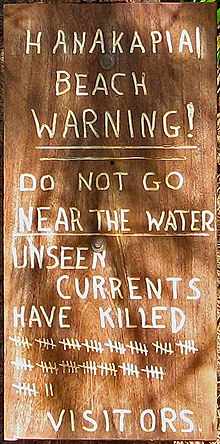
Counting can pass off in a variety of forms.
Enumeration can be verbal; that is, speaking every number out loud (or mentally) to keep track of progress. This is often wont to count objects that are portray already, as an alternative of counting a variety of things ended time.
Counting fire too be in the form of tally marks, devising a mark for each figure and and so counting all of the Marks when done tallying. This is useful when tally objects over time, such as the number of times something occurs during the line of a Day. Tallying is base 1 counting; normal counting is done in base 10. Computers use base 2 reckoning (0s and 1s), as wel known as Mathematician algebra.
Counting can also be in the form of feel counting, especially when counting small numbers. This is often used by children to facilitate counting and simplex mathematical trading operations. Finger-counting uses unary notational system (extraordinary finger = one unit), and is therefore limited to counting 10 (unless you start in with your toes). Older finger counting used the four fingers and the three bones in each finger (phalanges) to count to the number twelve.[3] Other hand-motion systems are also in use up, for example the Chinese system aside which one can count to 10 victimization only gestures of one hand over. By victimisation finger binary (infrastructure 2 counting), it is realistic to keep down a finger count up to 1023 = 210 − 1.
Single devices can also be used to facilitate counting, such as hand tally counters and abacuses.
Inclusive counting [edit]
Inclusive counting is usually encountered when dealing with fourth dimension in Roman calendars and the Solicit languages.[4] When counting "inclusively," the Dominicus (the start day) leave be Day 1 and thus the following Dominicus testament be the eighth day. For example, the French phrase for "fortnight" is quinzaine (15 [days]), and similar wrangle are present in Greek (δεκαπενθήμερο, dekapenthímero), Spanish (quincena) and Portuguese (quinzena). In contrast, the English word "fortnight" itself derives from "a cardinal-night", as the archaic "sennight" does from "a seven-night"; the English language words are not examples of comprehensive counting. In exclusive counting languages such as English, when counting eighter from Decatur days "from William Ashley Sunday", Monday will exist day 1, Tuesday day 2, and the following Monday will be the eighth sidereal day.[ reference needed ] For many years it was a standard drill in English law for the phrase "from a date" to mean "beginning on the day after that date": this practice is straightaway deprecated because of the higher risk of misunderstanding.[5]
Name calling supported comprehensive counting appear in other calendars as well: in the Roman calendar the nones (meaning "nine") is 8 days before the ides;[4] and in the Religion calendar Quinquagesima (meaning 50) is 49 days before Easter Day.
Musical terminology as wel uses inclusive numeration of intervals between notes of the standard scale: going up one note of hand is a s interval, going up deuce notes is a third interval, etc., and going up seven notes is an octave.
Education and development [edit out]
Learning to count is an important educational/biological process milestone in most cultures of the human beings. Learning to number is a child's really first step into mathematics, and constitutes the all but fundamental idea of that discipline. However, some cultures in Amazonia and the Australian Outback come not count,[6] [7] and their languages do non sustain number words.
Many children at antitrust 2 years aged experience some attainment in reciting the count list (that is, saying "one, two, three, ..."). They terminate also answer questions of ordinality for low Numbers, for exercise, "What comes subsequently trio?". They can even exist skilled at pointing to each object in a set and reciting the words matchless after some other. This leads many parents and educators to the conclusion that the nestling knows how to use tally to settle the size of a coiffur.[8] Research suggests that it takes about a year after encyclopedism these skills for a tike to sympathise what they mean and why the procedures are performed.[9] [10] Meantime, children learn how to name cardinalities that they can subitize.
Counting in maths [edit]
In mathematics, the essence of numeration a set and finding a result n, is that it establishes a one-to-nonpareil correspondence (Beaver State bijection) of the put up with the subset of plus integers {1, 2, ..., n}. A fundamental fact, which can embody proved by science induction, is that no bijection can exist between {1, 2, ..., n} and {1, 2, ..., m} unless n = m ; this fact (together with the fact that two bijections rear be composed to give another bijection) ensures that counting the same set in different ways can never result in different numbers (unless an computer error is made). This is the fundamental frequency mathematical theorem that gives reckoning its purpose; however you count a (finite) set, the answer is the same. In a broader linguistic context, the theorem is an lesson of a theorem in the mathematical subject area of (finite) combinatorics—hence (finite) combinatorics is sometimes referred to as "the mathematics of counting."
Many sets that arise in math practise non allow a bijection to be established with {1, 2, ..., n} for any natural number n; these are called infinite sets, while those sets for which such a bijection does exist (for some n) are called delimited sets. Infinite sets cannot cost counted in the accustomed sensation; for one thing, the mathematical theorems which underlie this usual sense for finite sets are false for infinite sets. Moreover, different definitions of the concepts in price of which these theorems are stated, while equivalent for finite sets, are inequivalent in the context of infinite sets.
The notion of counting May be extended to them in the sense of establishing (the existence of) a bijection with some well-understood exercise set. For instance, if a set prat be brought into bijection with the put over of all natural numbers, and so information technology is called "countably infinite." This kind of reckoning differs in a fundamental way from numeration of finite sets, in that adding freshly elements to a set does not necessarily increase its size, because the possibility of a bijection with the original set is not excluded. For instance, the set of complete integers (including negative numbers) can be brought into bijection with the set of uncolored numbers, and even on the face of it much larger sets like that of every finite sequences of demythologized Numbers are still (only) countably infinite. Nevertheless, at that place are sets, such as the set of concrete numbers, that can be shown to embody "overlarge" to take a bijection with the natural numbers, and these sets are called "uncountable." Sets for which there exists a bijection between them are said to have the same cardinality, and in the most general sensory faculty counting a place can be taken to tight determining its cardinality. Beyond the cardinalities given by each of the natural numbers, there is an infinite hierarchy of infinite cardinalities, although only very few such cardinalities occur in common mathematics (that is, outside set hypothesis that explicitly studies viable cardinalities).
Counting, mostly of finite sets, has various applications in mathematics. One important principle is that if two sets X and Y have the Saami finite number of elements, and a function f: X → Y is known to be injective, then it is also surjective, and contrariwise. A related fact is famed as the pigeonhole principle, which states that if deuce sets X and Y have finite Numbers of elements n and m with n > m , then any map out f: X → Y is non injective (then thither exist two knifelike elements of X that f sends to the same element of Y); this follows from the quondam rule, since if f were injective, past so would its restriction to a self-abnegating subset S of X with m elements, which restriction would and so be surjective, contradicting the fact that for x in X outside S, f(x) cannot be in the image of the restriction. Connatural enumeration arguments can prove the existence of certain objects without explicitly providing an instance. In the cause of infinite sets this can even utilize in situations where it is impossible to give an example.[ citation needful ]
The field of enumerative combinatorics deals with computation the list of elements of finite sets, without actually enumeration them; the latter usually being out of the question because unnumberable families of finite sets are considered at once, much as the set of permutations of {1, 2, ..., n} for any uncolored number n.
See also [edit]
- Automatic pill return
- Card reading (bridge)
- Calculation
- Cardinal number
- Combinatorics
- Count data
- Counting (music)
- Numeration problem (complexity)
- Child psychology
- Elementary arithmetic
- Finger counting
- History of mathematics
- Jeton
- Level of measurement
- Mathematical quantity
- Ordinal number
- Molecule number
- Subitizing and counting
- Tally mark
- Unary numeral system
- Heel of numbers
- List of numbers in individual languages
- Yan tan tethera (Counting sheep in Britain)
References [delete]
- ^ An Introduction to the History of Mathematics (6th Edition) by Howard Eves (1990) p.9
- ^ "Early Fallible Counting Tools". Math Timeline . Retrieved 2018-04-26 .
- ^ Macey, Samuel L. (1989). The Kinetics of Advance: Time, Method, and Measurement. Atlanta, Georgia: University of Georgia Press. p. 92. ISBN978-0-8203-3796-8.
- ^ a b Evans, James (1998). "4". The Account and Practice of Ancient Astronomy. Oxford Iron out. p. 164. ISBN019987445X.
- ^ "Draftsmanship bills for Fantan". gov.Great Britain. Office of the Parliamentary Counsel. See heading 8.
- ^ Butterworth, B., Reeve, R., Reynolds, F., & Lloyd, D. (2008). Numeral thought with and without words: Testify from indigenous Australian children. Legal proceeding of the National Academy of Sciences, 105(35), 13179–13184.
- ^ Gordon, P. (2004). Numerical cognition without words: Attest from Amazonia. Science, 306, 496–499.
- ^ Fuson, K.C. (1988). Children's count and concepts of number. NY: Springer–Verlag.
- ^ Le Corre, M., & Carey, S. (2007). One, two, three, four, nothing more: An investigation of the conceptual sources of the verbal counting principles. Cognition, 105, 395–438.
- ^ Le Corre, M., Van de Walle, G., Brannon, E. M., Carey, S. (2006). Re-visiting the competence/performance consider in the acquisition of the counting principles. Cognitive Psychology, 52(2), 130–169.
how is counting by 5 like counting by 10
Source: https://en.wikipedia.org/wiki/Counting

Posting Komentar untuk "how is counting by 5 like counting by 10"